A land that still keeps its own stories
GIET University sits in Rayagada district, where the Eastern Ghats fold into some of India's oldest living cultures. Come for the conference — stay a day longer for the hills, the art and the people who never left their roots.
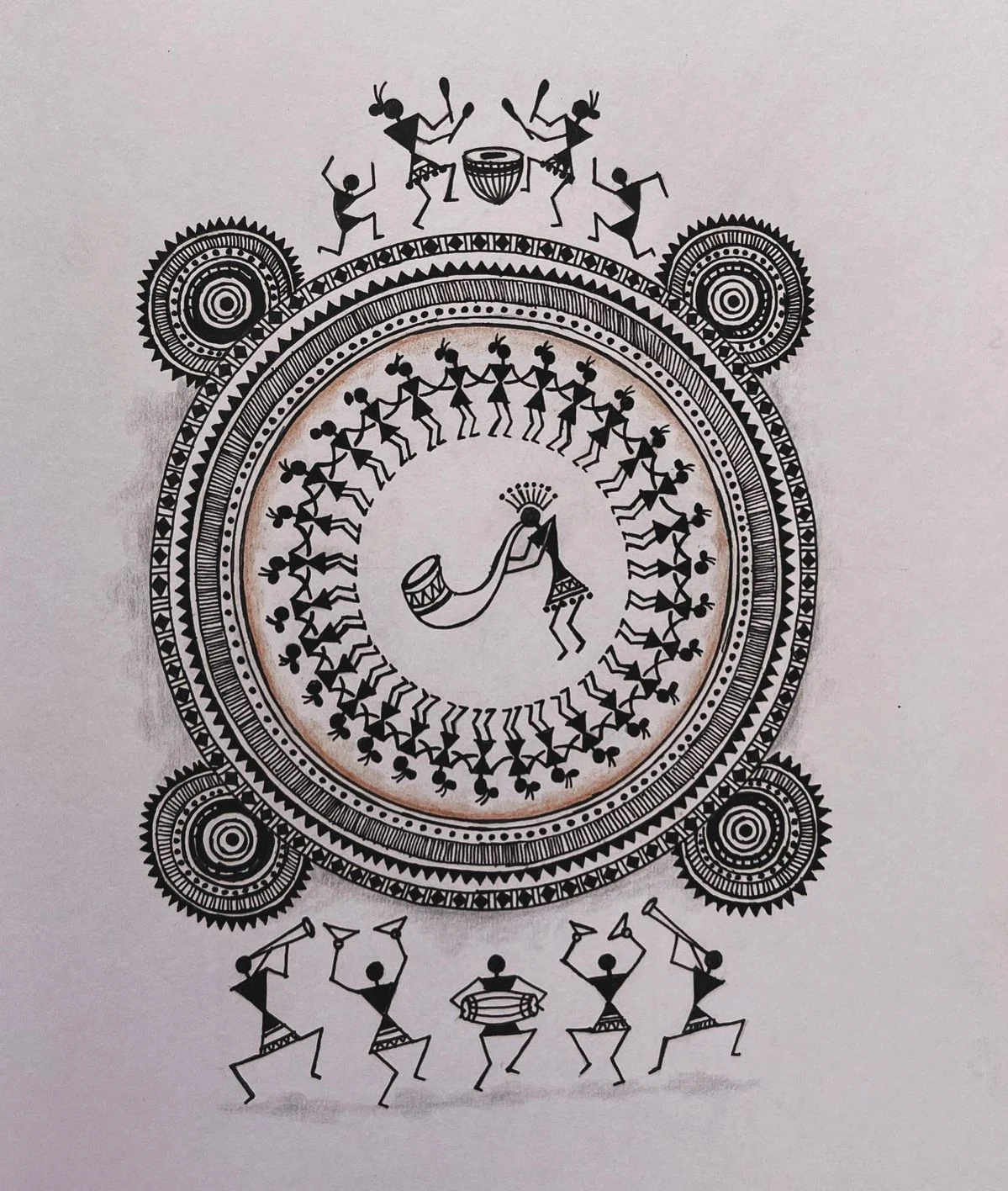
A gallery of living art
Four traditions still made by hand within a few hours of campus — for use, for worship, and for each other, rarely for sale.
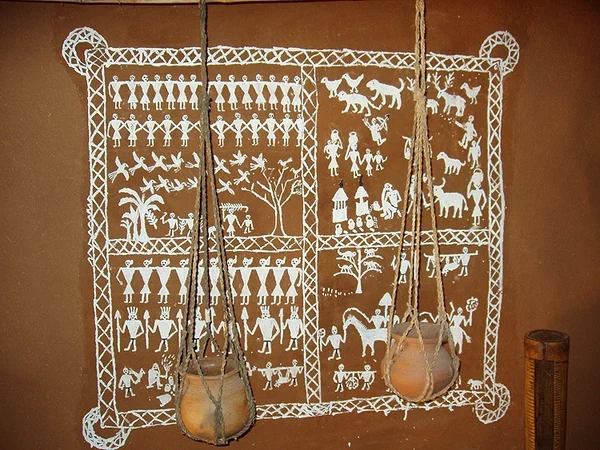
Idital
An idital is not decoration. Painted in white rice paste on an earth-red wall, it is commissioned through a shaman to heal an illness, honour the dead or thank a harvest — then left to weather away.
- Made with
- Rice paste on ochre-washed mud wall
- Motifs
- Stick figures, horses, sun and moon, tree of life
- Recognition
- GI-tagged tribal art of Odisha
- See it near
- Saura villages around Puttasingi
Kapdaganda
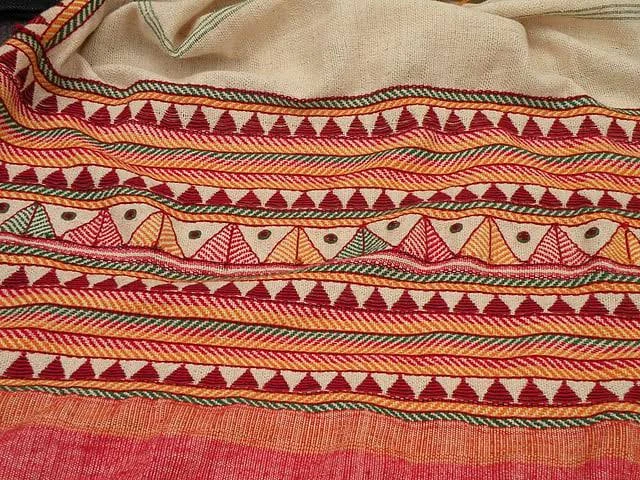
Unmarried Dongria girls embroider these coarse cotton shawls by hand in green, yellow and red. The rows of triangles are Niyamgiri itself; the finished shawl is given to a brother or a beloved.
- Made with
- Hand embroidery on handwoven cotton
- Motifs
- Triangles for hills, lines for streams
- Recognition
- GI-tagged craft
- See it near
- Niyamgiri slopes and weekly haats
Tumba
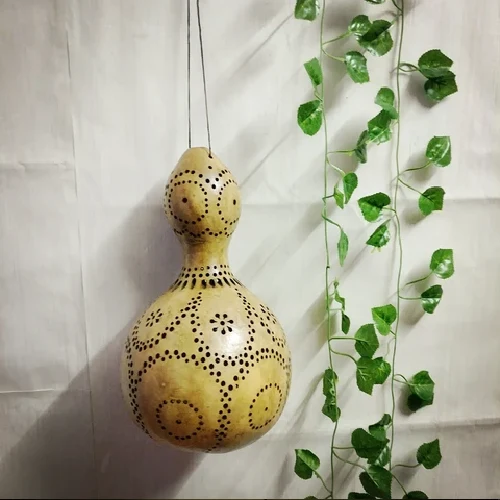
A bottle gourd, dried and hollowed, becomes a water flask, a seed store, a measure. The surface is scored and burnt into bands of dots, triangles and zigzags — an everyday object given a maker's signature.
- Made with
- Dried bottle gourd, burnt and etched line work
- Used as
- Water, seed and liquor vessels; now lamps and décor
- Motifs
- Dot bands, chevrons, concentric arcs
- See it near
- Village markets across Rayagada
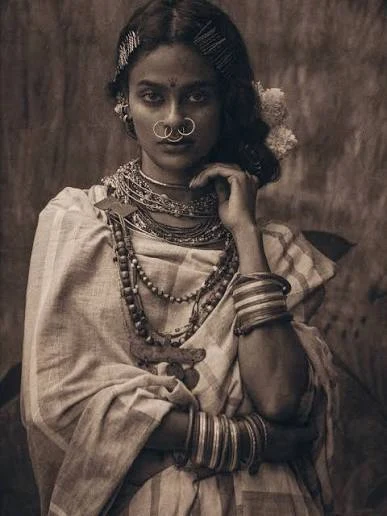
Beadwork & Brass
A Dongria woman's adornment is readable: brass neck rings, layered strands of glass beads, and a crown of hairpins that doubles as a working comb. Pieces are gathered one at a time, never bought as a set.
- Made with
- Brass, aluminium and glass beads
- Meaning
- Marks age, kinship and marital status
- Worn
- Daily — not only for festivals
- See it near
- Chatikona and Bisamcuttack markets
Craft in daily use
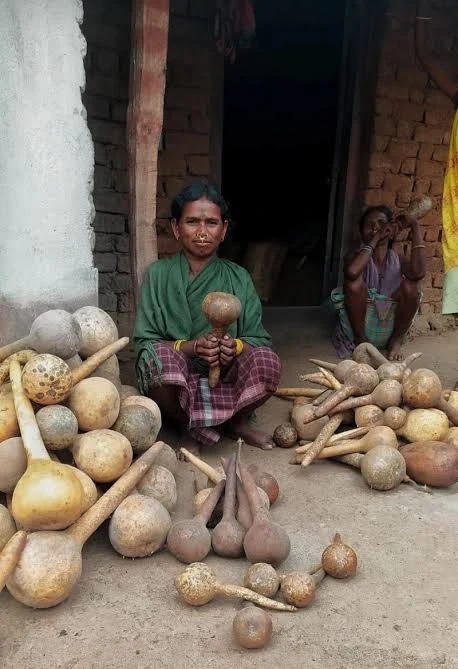
Every flask starts as a season's crop, sorted by shape for what it will become.
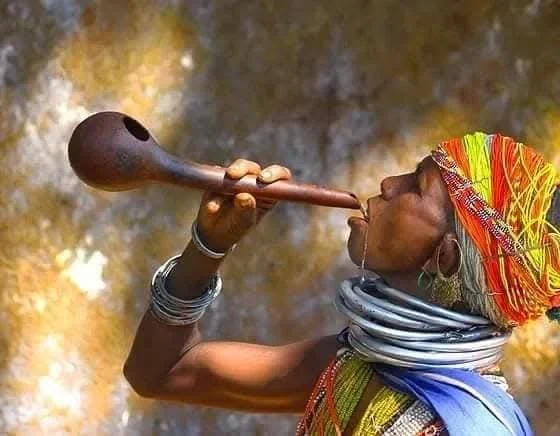
The same plant gives the vessel, the lamp and the horn played at village festivals.
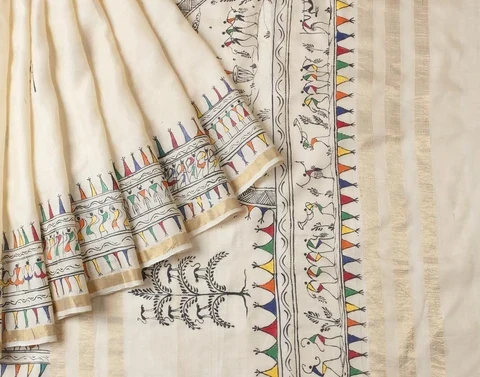
Wall figures have moved onto cloth, keeping weavers and painters working together.
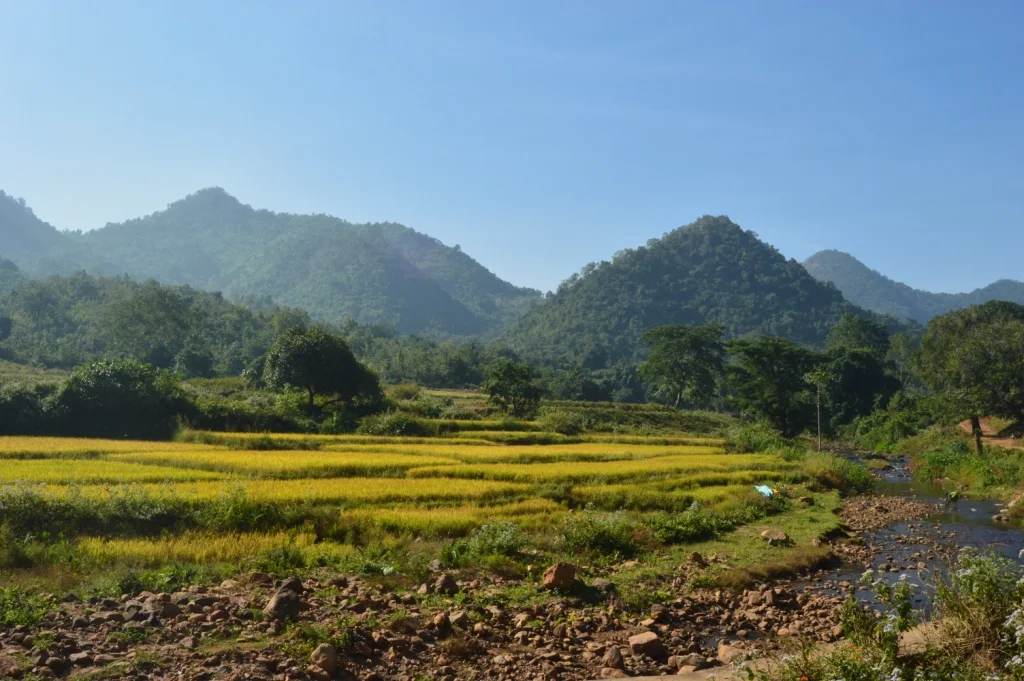
Niyamgiri is not a view. It is a person.
To the Dongria Kondh, the range is Niyam Raja — the king who gives the law. The hill is not where the god lives; the hill is the god. Streams are his, the sal and bamboo are his, and the fruit gardens on his slopes are held in trust rather than owned.
That belief was tested when a bauxite deposit was found beneath the summit. In 2013, twelve Dongria villages were asked, one gram sabha at a time, whether mining should go ahead. Every one of them said no — a decision that has since become a landmark in how India weighs indigenous consent.
Delegates who make the drive to the foothills find no monument and no ticket counter. Just a ridge line, orange and jackfruit trees planted under canopy, and villages that measure wealth in what the forest still gives.
Turmeric, ginger, pineapple, jackfruit, orange and millet — grown in mixed plots under forest canopy, without clearing and largely without chemicals. Niyamgiri turmeric carries a GI tag of its own.
Once a week the haat at Chatikona fills with Dongria families trading forest produce. It is the most direct way to meet the community — on their terms, mid-trade, rather than as an audience.
The people of these hills
Southern Odisha holds more tribal communities than any other part of India. These are the neighbours closest to campus.
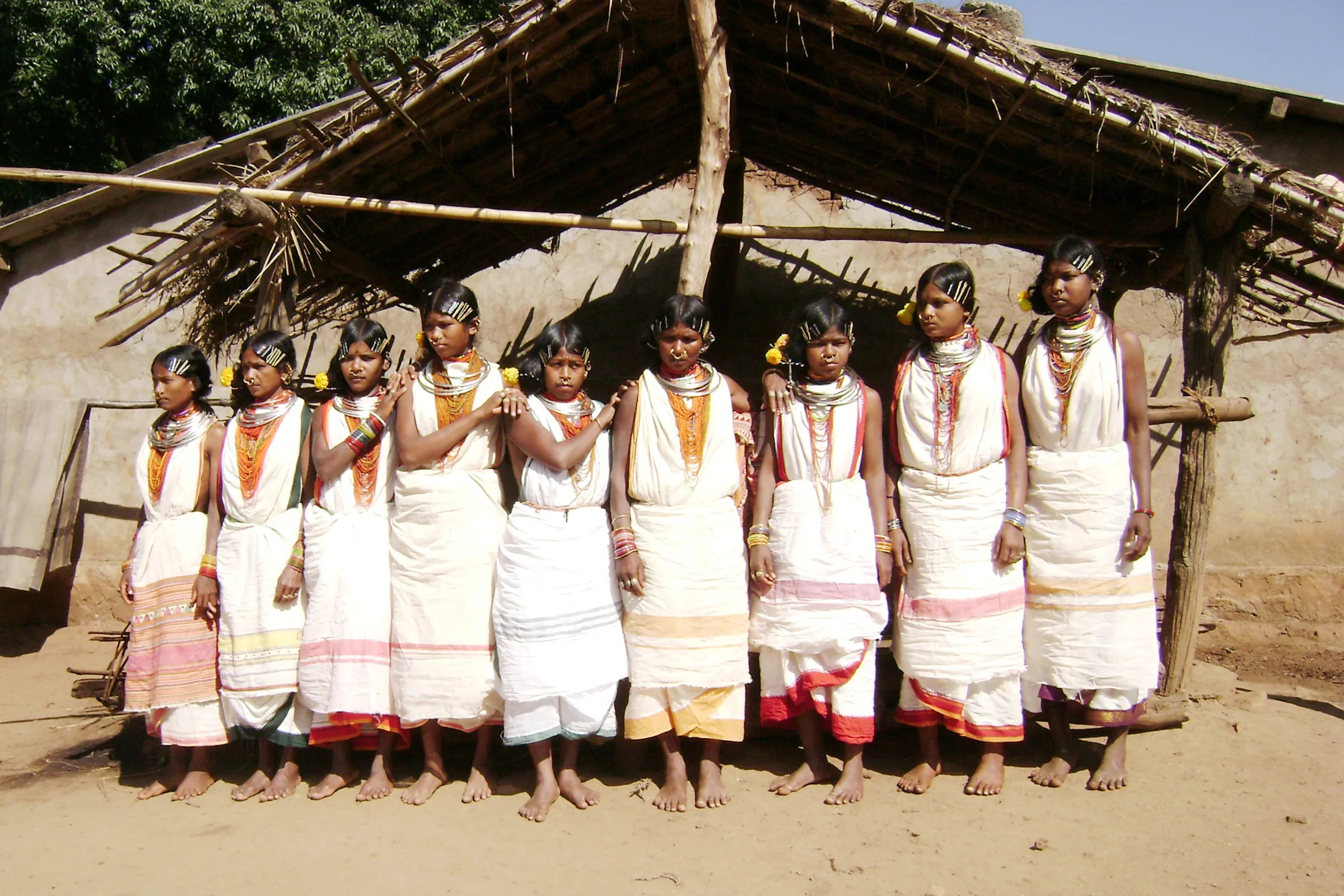
Dongria Kondh
Hill horticulturists who raise pineapple, jackfruit, orange, ginger and turmeric in forest gardens. Their village-referendum defence of Niyamgiri against bauxite mining is known worldwide.
Lanjia Saura
Among the oldest communities recorded in Indian texts. Masters of terraced hill cultivation, and the painters of idital murals made by shaman-artists rather than for sale.
Kutia Kondh
Millet farmers working steep slopes, with a rich oral tradition of origin songs. Older women carry distinctive facial tattoos marking lineage and passage into adulthood.
Paraja, Jhodia & others
Odisha is home to 62 Scheduled Tribes — 13 of them classed as Particularly Vulnerable Tribal Groups — more than any other state in India.
The ground it all stands on
An older, broken hill system that predates the Himalaya, holding sal, bamboo and pockets of semi-evergreen forest.
A range rising above 1,500 m whose perennial streams feed the Vamsadhara and Nagavali rivers running past Gunupur.
Dongria plots interplant pineapple, jackfruit, orange, ginger and turmeric under forest canopy — farming without clearing.
Elephant herds, sloth bear, leopard, giant squirrel and hornbills are recorded across the range's forest belts.
Worth the drive
Distances from GIET University, Gunupur. Roads here are hill roads — allow more time than a map suggests.
Visiting well
These are homes and working markets, not exhibits. A little care keeps them that way for the delegates who come after you.
- Ask before photographing anyone. A weekly haat is a workplace, not a backdrop.
- Buy directly from makers where you can, and pay the price asked without bargaining it down.
- Hilltops, groves and stones are living shrines. Go with someone local who can tell you where not to walk.
- Please don't hand sweets, pens or money to children — it turns a village into a stop on a route.
- A few areas need prior permission. Plan any trip beyond the town through the Organizing Secretary.
Build a day around it
The Organizing Secretary can help arrange transport and a local guide for delegates staying on either side of the conference.